

Keynote Speeches
Labour shortages. Rising complexity. Increasing service demands. Tight funding environments. Rapid technological change. Social services leaders are being asked to do more than ever—with finite resources and workforces already stretched thin.
And now, on top of all of it: AI. ChatGPT reached one million users in five days—the fastest-growing consumer application in history. AI is projected to add $4.4 trillion a year to the global economy. Thirty percent of current work may be automated by 2030. You’ve heard the numbers. You’ve felt the pressure. And if you’re like most leaders right now, you’re wondering: what does this mean for my people?
Here’s what the data actually says: the World Economic Forum identifies the top current workplace competencies as analytical thinking, creativity, originality, and the ability to learn, unlearn, and relearn—precisely the human capabilities that AI cannot replicate. The answer to the AI moment isn’t to chase the technology. It’s to invest, more deliberately than ever, in your people.
The greatest source of innovation in your organization isn’t hiding in a new platform or a restructured process. IBM research is unambiguous: employees are the single most significant source of innovative ideas—ahead of consultants, customers, partners, and formal R&D. Yet most organizations capture only a fraction of that potential. The gap between what your people could contribute and what they currently do isn’t a talent problem. It’s a leadership opportunity.
The future belongs to leaders in the social services sector who know how to unlock the creativity, adaptability, and problem-solving capacity of their workforce. Your mission depends on people helping people. So does your ability to keep delivering on it.
“When the world is predictable, you need smart people. When the world is unpredictable, you need creative, adaptable people.”
— Henry Mintzberg
About This Session
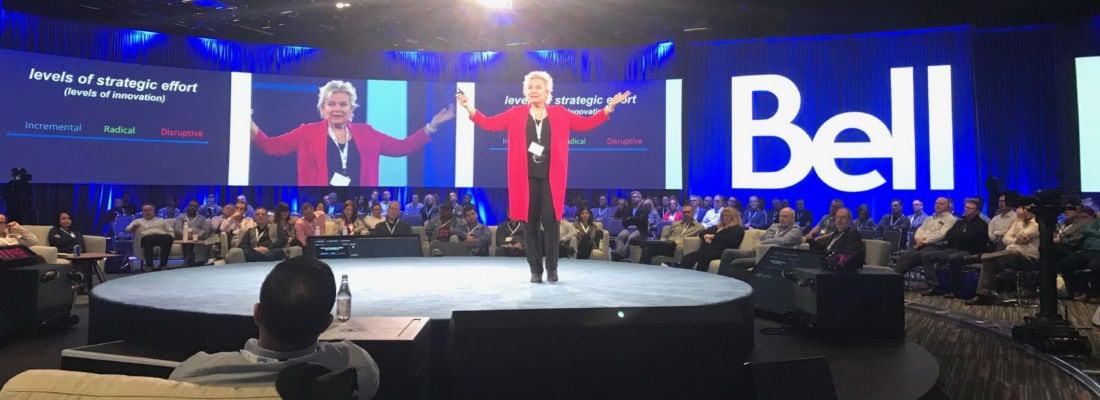
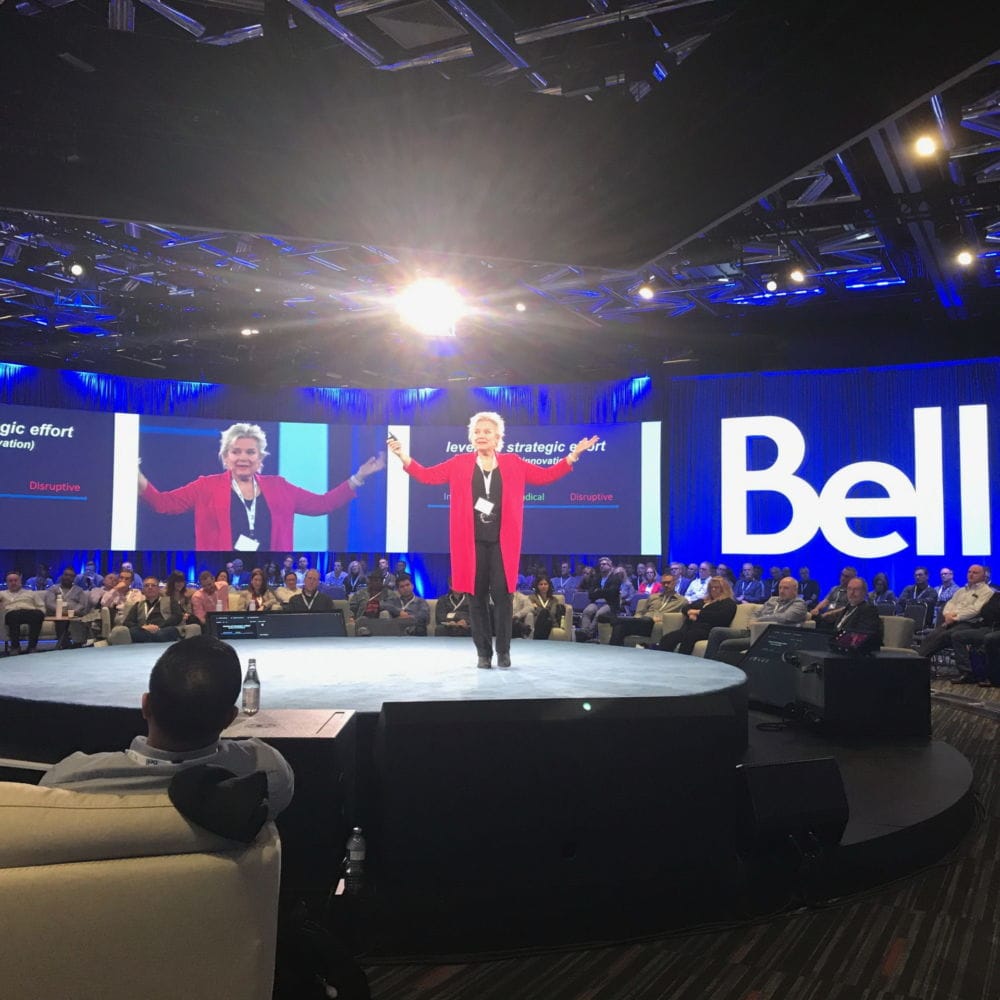
In this high-energy keynote, innovation leadership expert Lee-Anne McAlear takes leaders through four practical innovation hacks designed for complex, unionized organizations navigating constant change. She will challenge conventional thinking about what innovation leadership actually looks like—and equip participants with tools they can apply the same week.
Drawing on research from leadership, organizational psychology, and workplace engagement, Lee-Anne explores why creativity and collaboration—not technology—are the essential inputs to meaningful innovation. She’ll show you how to identify the type of innovation challenge you’re facing, how to move from being a leader who manages creativity out of an organization to one who leads it in, and why breaking down silos isn’t just a cultural nicety—it’s the single most important structural move available to you right now.
Participants Will Leave With
- The four innovation hacks every leader in a complex, unionized environment needs right now
- A framework for identifying where your current challenges sit on the innovation continuum—and what type of leadership each level requires
- Practical tools to break down silos and activate the collective intelligence already distributed across your workforce
- Evidence-based strategies for building cultures where people bring discretionary effort, contribute ideas, and become active partners in organizational problem-solving
- Concrete actions to take before Friday—not just inspiration that fades by Monday morning
Whether you lead a small community-based service organization or a large, multi-service agency, this session will demonstrate why the future of innovation is deeply human—and why the leaders who learn to unleash the potential of their people will be the ones best positioned to keep showing up for the communities that need them most.
How do we turn the buzzwords of today into meaningful realities that deliver value?
In this highly interactive session, Lee-Anne will pull on her fabulous collection of stories gleaned from leaders and teams around the world that highlight real-life solutions to the current challenges of hybrid productivity, hyper-collaboration, and radical innovation.
Building on insights, case studies and new research, she will help answer the questions that our changed reality and this new navigation demands. Energized audiences will leave with practical tips, techniques, and approaches for where to start and how to move forward.
Most of us do not work in start-ups and we probably won’t ever work in innovation incubators, hubs or labs. Why is this important? Because what works for a small group of entrepreneurs in a highly charged, flat organization is unlikely to work for those who work in medium to large enterprises which, by the way, is where most of us are found and where innovation is badly needed.
While some of the principles of a start-up can be applied, little else can. In this interactive and engaging talk, Lee-Anne will highlight the effective and exciting ways large organize innovate. Yes, they do. The innovation landscape is filled with fantastic examples and stories of how organizations of many levels and many people have met the challenges of delivering new value in new ways. Lee-Anne can’t wait to share them with you!
Culture doesn’t just eat strategy for breakfast – it eats it for breakfast, lunch and dinner. Organizations don’t innovate, people do. There is a correlation between employee engagement and creativity.
59% of engaged employees say that their job ‘brings out their most creative ideas’. Of the surveyed employees who were disengaged, only 3% said the same thing.
In this captivating keynote, Lee-Anne will address the questions of how we create engaged cultures where creativity is freely applied to all our thorny challenges and our people can’t wait to face the day. How do we create environments where people feel better leaving work than they did when they came in?
To thrive in this dynamic environment, businesses and people have learned that resilience, adaptability, and creativity are the keys to unlocking possibility and creating success. One of the questions often asked is, “How do we transform those characteristics into effective new business approaches?”
In this enlightening talk, Lee-Anne will introduce a creative-problem solving approach tailor-made for our current reality. With a flexible framework and real-world cases, she will expand your problem-solving approaches and enrich your innovative capability. She believes that we were made for these times.
Complexity now reigns. If there were only simple problems and simple solutions, we could thrive with a template and an algorithm. That we are biological beings in an increasingly digital world, means that critical thinking and experts are no longer enough. Experts are always experts of old stuff.
In this informative and stimulating talk, Lee-Anne will build on her years of working globally in different countries, sectors, and industries to animate the key leadership principles that will shape our ever-changing reality and our best, next strategies.
She will speak to how organizational levers like adaptability and creativity can help us navigate and lead into the future. She’ll explore how resilient organizations and leaders frame their challenges, engage their people and help them skill up and thrive!
Today, every leader is experiencing never-ending waves of change. Change, as we know, takes place on a continuum – from a little to a lot, from incremental to disruptive. Leadership behaviors are different whether we are asking people to adapt or asking them to transform. Effective leaders understand that not only does change have different levels, but people also experience those levels in different ways.
Change is not a universal experience; it is intensely personal, and a broad-brush approach is seldom effective. Leaders are particularly challenged as they have to lead changes of their own, steward organizational changes plus experience change themselves. And let’s not forget, inspire others while they are at it!
Building on her decades of experience in working with leaders who innovate and change, Lee-Anne will explore leaders’ best change practices, ‘next’ changes practices and new changes practices. The audience will leave with fresh eyes, novel ideas, and practical strategies.


Similar Speakers 123